Best 4K Camera Drone for Bird Watchers: CHUBORY Leads
Zoom range is not what separates these five drones. Motor noise, control distance and total flight minutes are. Here's the ranked shortlist, the buyer each pick suits, and the honest limits of flying a camera drone anywhere near wildlife.

By Travis WaltersUpdated 15 min read
On this page
- Best 4K camera drone for bird watchers at a glance
- How I cut the field down to five 4K camera drone options
- Why the camera spec is the least useful number here
- 1. CHUBORY GPS Drone with EIS 4K Camera for Adults — Best overall
- 2. Sewsunny GPS Drone with 1080P Camera for Adults — Best upgrade
- 3. LOQFGDW 4K UHD GPS Drone — Best premium
- 4. PLEGBLE Drones with Camera for Adults 4K — Most versatile
- 5. Mgfdget Mini Drone for Kids with 4K Dual Cameras — Best budget pick
- How close can a 4K camera drone for bird watchers actually get?
- What more money buys across these five
- What the listings don't tell you
- The verdict
- FAQ
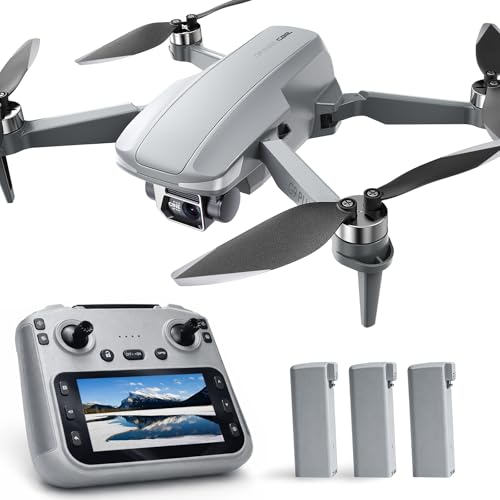
The best 4K camera drone for bird watchers is the CHUBORY GPS Drone with EIS 4K Camera, because it pairs a 3280 FT control range with three batteries rated for 90 minutes of total flight and a shell that weighs just 6.81 oz. If you'd trade the 4K sensor for the lightest airframe in this group, the Sewsunny GPS drone drops to 205g with a 4.5-inch screen remote. Most buyers compare sensor resolution first. That's the wrong number.
Best 4K camera drone for bird watchers at a glance
| Pick | Camera & range | Flight time | Price |
|---|---|---|---|
Best overall CHUBORY GPS Drone with EIS 4K Camera |
4K claim, 90° tilt 3280 FT claim |
90 min total 3 batteries |
Check Price |
Best upgrade Sewsunny GPS Drone with 1080P Camera |
1080p claim, 90° tilt GPS + optical flow |
Modular battery count not listed |
Check Price |
Best premium LOQFGDW 4K UHD GPS Drone |
Dual 4K claim, 110° lens GPS tracking |
60 min total 3 batteries |
Check Price |
Most versatile PLEGBLE Drones with Camera 4K |
4K claim, 120° lens FPV via app |
About 30 min 2 batteries |
Check Price |
Best budget pick Mgfdget Mini Drone with Dual Cameras |
Dual 4K claim manual tilt |
2 batteries minutes not listed |
Check Price |


How I cut the field down to five 4K camera drone options
Three things knocked listings out before I compared a single specification.
First cut: no published control range and no positioning system. A drone that holds position on optical flow alone drifts over water and over uneven canopy, which is exactly where you'd be flying. Two of the five survivors publish GPS. The CHUBORY and the Sewsunny both list auto-return.
Second cut: no stated airframe weight. Weight decides whether you're inside the 250g class that most casual flyers plan around, and it decides how the thing behaves in a breeze off an estuary. Three of these five publish a figure. Two don't, and I've flagged that in their sections rather than guessing.
Third cut: nothing about motor type. Brushless motors run quieter than brushed ones, and quiet matters more than anything else on this page. Four of the five listings claim brushless. The Mgfdget doesn't mention motor type at all, which is part of why it sits last.
What survived is a set of five foldable quadcopters in the same category, all under a pound where weight is published, spread across every price position from cheapest to most expensive. That spread is deliberate. It lets you see what an extra tier actually buys before you commit.
Why the camera spec is the least useful number here
Every product on this page except one claims 4K. That tells you almost nothing about whether you'll come home with a usable frame of a heron.
Here's what actually decides it, in order:
- Motor noise. Birds flush from sound long before they react to a shape in the sky. Brushless motors are the quieter design, and four of these five claim them.
- Control range. The further you can stand from the subject, the less you influence it. CHUBORY publishes 3280 FT. Nobody else in this set publishes a distance at all.
- Total flight minutes. Wildlife runs on its own clock. 90 minutes across three packs beats 30 minutes across two, every time.
- Positioning and auto-return. A GPS return-to-home is what saves the drone when you lose sight of it against a treeline.
- Sensor resolution. Last. A 4K frame of a distant blur is still a blur.
None of these drones publishes an optical zoom figure, and that's the honest limit of the category. A fixed wide lens at 110° or 120° means the bird occupies a small slice of the frame unless you're close, and close is the one thing you're trying to avoid. Resolution buys you cropping room, which is real but modest.
So treat 4K as a floor rather than a feature. Compare the things above it instead.
1. CHUBORY GPS Drone with EIS 4K Camera for Adults — Best overall
The only pick here that publishes a control distance, and 3280 FT of it changes how close you have to stand.
Best for: long walks to a distant hide or shoreline, where you want one bag and three batteries.
Skip it if: you need a second camera angle from the same flight.
Two figures separate this from everything else in the group. The 3280 FT control range is the only published distance on this page, and CHUBORY says the aircraft auto-returns home at a button press. The three included batteries are rated for 90 minutes of total flight, the highest published total here by 30 minutes. For anything involving waiting, that gap is the whole argument.
The airframe weighs 6.81 oz and folds to 2 x 3.1 x 5.3 in, so it disappears into a coat pocket rather than a camera bag. CHUBORY lists a 4.5-inch non-touch screen built into the controller, which means your phone stays in your pocket and stays charged. The camera is described as 4K UHD on a 90° adjustable mount, and the brand claims low-noise brushless motors, which is the specification that matters most around wildlife.
The trade-off against the LOQFGDW is a single camera instead of two, and against the PLEGBLE, no app control path. Only one seller lists it, which narrows your options if something goes wrong.
Pros:
- Only pick publishing a control range, at 3280 FT
- Highest published total flight time, 90 minutes
- Three batteries included in the box
- 4.5-inch controller screen, no phone needed
- Folds to 2 x 3.1 x 5.3 in
Cons:
- Single camera where two picks claim dual
- Sits in the more expensive half of this set
- Only one seller lists it
- No app control option mentioned
2. Sewsunny GPS Drone with 1080P Camera for Adults — Best upgrade
The lightest published airframe here at 205g, with GPS and optical flow working together instead of one or the other.

Best for: windy open ground and repeat trips to one spot, where a modular battery matters.
Skip it if: you want 4K capture rather than 1080p.
This is the one that sells fastest of the five, and the specification sheet suggests why. Sewsunny publishes 205g for the folded airframe, well under the 249g threshold the listing references, and separately lists a 6.4 oz weight. That's the lightest published figure on this page. Light means it goes up in less wind and comes down gently when a gust catches it.
It's also the only pick here claiming both GPS and optical flow positioning together, plus three separate auto-return triggers: low battery, signal loss, and a one-key return. For flying over water or a reedbed where you can't walk to a downed aircraft, redundancy is worth more than pixel count. The 4.5-inch LCD remote matches the CHUBORY's approach, and the brand claims brushless motors with a detachable modular battery.
The camera is the catch. Sewsunny's own copy says 1080p, not 4K, which puts it outside the strict reading of what you came here for. You get less cropping room, and cropping room is how you make a distant bird fill a frame.
Pros:
- Lightest published airframe here, 205g
- GPS plus optical flow, unique in this set
- Three separate auto-return triggers listed
- Detachable modular battery for quick swaps
- Built-in 4.5-inch screen on the controller
Cons:
- 1080p camera, not 4K like the rest
- Battery count is not published
- Total flight time is not published
- Only one seller lists it
3. LOQFGDW 4K UHD GPS Drone — Best premium
Dual cameras and a 110° lens on the most expensive airframe here, but the published dimensions are the largest by a wide margin.

Best for: framing two angles at once from a fixed position near a feeder or pond.
Skip it if: you carry gear on foot over any distance.
The dual-camera setup is the genuine differentiator. LOQFGDW claims a 4K Ultra HD main camera with a 110° wide-angle lens and 90° of tilt adjustment, plus a second camera. Two simultaneous framings from one hover is useful when you can't ask the subject to hold still, and no other pick at this price position offers it.
Three batteries are listed for 60 minutes of total flight, second only to the CHUBORY. The brand claims brushless motors, automatic subject tracking, pre-set flight paths, and orbit around a fixed point. A carry bag comes with it. GPS is in the product name.
Then the size. The published dimensions are 12.8 x 14.2 x 13.4 in, which is several times the footprint of every other pick here, and no weight figure appears anywhere in the listing. That combination is the problem: you can't judge whether it clears the weight class you're planning around, and it plainly won't pocket. For a hide you drive to, fine. For a two-mile walk to a headland, the CHUBORY wins on bulk alone.
Pros:
- Dual cameras, rare in this group
- 110° wide-angle lens with 90° tilt
- 60 minutes total across three batteries
- Tracking, waypoints and orbit modes claimed
- Carry bag included
Cons:
- Largest published dimensions by far, 12.8 x 14.2 x 13.4 in
- No published weight anywhere in the listing
- Most expensive pick here
- Only one seller lists it
4. PLEGBLE Drones with Camera for Adults 4K — Most versatile
The widest published lens here at 120°, and the only pick offering both remote and phone control.

Best for: phone-based flying in a back garden or small clearing.
Skip it if: you need a published weight before you fly.
PLEGBLE publishes a 120° wide-angle lens with 90° of tilt, the broadest field of view stated on this page. Wide helps with habitat context: the whole hedgerow, the whole margin of a pond, rather than a tight crop on one perch. The brand describes real-time FPV, and control runs either through the remote or through the app, making this the only pick with two published control paths.
Two batteries extend flight to about 30 minutes according to the listing, and PLEGBLE claims a high-efficiency brushless motor described as quieter and more stable, plus UL certification. One-key take-off and landing, stable hovering and emergency stop are all listed. Folded dimensions are 2.5 x 5.4 x 3 in, comfortably the second-smallest here.
The listing is thin where it counts. No weight, no GPS, no control range and no auto-return. Optical hovering alone drifts, and without return-to-home you're walking to wherever it lands. The 30-minute total is also the lowest published figure of the five, a third of what the CHUBORY claims. This is a short-session drone for ground you can see all of.
Pros:
- Widest published lens, 120°
- Both remote and app control paths
- Compact folded size, 2.5 x 5.4 x 3 in
- Second-cheapest pick here
- Brushless motor claimed for quieter flight
Cons:
- No published weight for the airframe
- No GPS or auto-return mentioned
- Lowest published flight total, about 30 minutes
- No control range figure given
5. Mgfdget Mini Drone for Kids with 4K Dual Cameras — Best budget pick
The cheapest of the five and the only one with propeller guards, which makes it the sensible place to learn the sticks.

Best for: learning the sticks before spending real money on an outdoor drone.
Skip it if: you plan to fly outdoors in wind.
Every skill you need for wildlife work is transferable, and crashing a cheap drone is how you get those skills. This is the cheapest pick here, it has four propeller guards, and Mgfdget lists an emergency stop and low-power LED alerts. Two batteries are included. It's also the only pick in this group with more than one seller, which gives you a second option if the first is unavailable.
The feature list claims dual 4K cameras with manual tilt adjustment, altitude hold, headless mode, one-key start and land, gesture selfies, waypoint flight and 360° flips. It's marketed at kids and beginners, and the copy is honest about that framing rather than dressing it up.
Where it falls short for outdoor use is clear. It weighs 8 oz, the heaviest published figure here, with a folded footprint of 2 x 2 x 2 in. There's no GPS, no auto-return beyond a one-key return, no control range, no flight-time figure, and no mention of motor type at all, so you can't assume the quieter brushless design the other four claim. It sells slowest of the five. Use it as a trainer, not as your field drone.
Pros:
- Cheapest pick in this set
- Four propeller guards fitted
- Two batteries included
- Emergency stop and low-power LED alerts
- More than one seller lists it
Cons:
- Heaviest published weight here, 8 oz
- No motor type stated in the listing
- No GPS and no control range figure
- No published flight time
- Slowest seller of the five
How close can a 4K camera drone for bird watchers actually get?
Nobody selling these drones publishes a zoom figure, and that's the single most important gap in the data. What you get is a fixed wide lens: 110° on the LOQFGDW, 120° on the PLEGBLE, unstated on the rest. A wide lens means the bird is small in frame unless the aircraft is close, and close is precisely what disturbs wildlife.
So the honest answer is that a drone is a habitat tool before it's a bird tool. Useful jobs it does well:
- Mapping a reedbed or estuary margin before you walk it
- Showing where water sits after rain, and where the birds have gone with it
- Reaching a sightline you can't get to on foot, across a channel or a fence line
- Recording nesting habitat from a height that doesn't require approach
For the bird itself, filling the frame, you want glass on a tripod. The drone finds the spot; the long lens takes the photograph. Treat those as two purchases rather than one, and the wide fixed lens stops being a disappointment.
Two more practical points. Check your local rules on flying near wildlife, protected sites and nesting seasons before you launch, because those rules vary enormously and none of these listings mentions them. And remember that the quieter the motors, the more the drone can do without ruining the thing you came to watch.
What more money buys across these five
The spread from cheapest to most expensive here is instructive, because the money doesn't go where you'd expect.
The entry positions. The Mgfdget and the PLEGBLE sit at the bottom. What you get is a 4K claim, propeller guards or app control, and two batteries. What you don't get is GPS, auto-return, a published control range or a published weight. Both are fine in a garden and unwise over water.
The middle. The Sewsunny sits between the two groups and spends the difference on positioning rather than pixels: GPS with optical flow, three auto-return triggers, 205g, a screen remote. It steps down to 1080p to fund that. If the drone coming home matters more than the crop, this is where the money works hardest.
The more expensive picks. The CHUBORY and the LOQFGDW are the two premium positions, and they diverge sharply. CHUBORY buys distance and endurance: 3280 FT and 90 minutes. LOQFGDW buys a second camera and 60 minutes, and pays for it in bulk at 12.8 x 14.2 x 13.4 in.
The pattern worth noticing: paying more in this category buys you range, batteries and positioning. It does not buy you a longer lens, because none of these drones has one.
What the listings don't tell you
Five gaps, and each one changes a decision.
- Zoom. No optical or digital zoom figure appears on any of the five listings. Assume fixed wide and plan around it.
- Decibels. Four listings claim quiet brushless motors. None publishes a noise figure, so "quieter" is relative to nothing you can check.
- Per-battery runtime. CHUBORY publishes 90 minutes across three packs and LOQFGDW 60 minutes across three. Neither states the per-flight figure, so divide and treat the result as a ceiling.
- Weight, on two picks. The PLEGBLE and the LOQFGDW publish no weight at all. If a specific weight class matters to you, that's a hard stop on both.
- Wind resistance. Sewsunny and PLEGBLE both mention stability. Neither gives a rated wind speed, and estuary wind is the environment where this category struggles most.
None of this is unusual for the segment. It does mean you should buy on the numbers that are published and treat the adjectives as marketing.
The verdict
Three tiers, three answers.
At the entry positions, the Mgfdget Mini Drone is the honest choice, and it's a trainer rather than a field instrument. Four propeller guards, two batteries, an emergency stop, and the lowest cost here. Learn to hover, learn to land, then upgrade. The PLEGBLE sits just above it with a 120° lens and app control, and works in a small clearing you can see all of.
In the middle, the Sewsunny GPS drone. 205g, GPS plus optical flow, three auto-return triggers and a 4.5-inch screen remote. It sells faster than anything else on this page and the specification sheet explains why. The compromise is a 1080p camera instead of 4K, which costs you cropping room.
At the top, the CHUBORY GPS Drone with EIS 4K Camera is the best 4K camera drone for bird watchers overall, and the reason is distance. 3280 FT of published control range is the only such figure in this set, and 90 minutes across three batteries is 30 minutes more than the next best. Standing further away and staying up longer is how you photograph wildlife without moving it. The LOQFGDW's counter-argument is its dual cameras, genuinely useful from a fixed position, but at 12.8 x 14.2 x 13.4 in it's a drive-to drone, not a walk-to one.
FAQ
Is a 4K camera drone for bird watchers worth the money?
A 4K camera drone for bird watchers is worth it as a habitat scout, not as a substitute for a long lens. None of these five publishes a zoom figure, so distant birds stay small in frame. What you buy is aerial context: reedbed layout, water levels, sightlines you can't walk to. Judged on that job, the CHUBORY's 3280 FT range earns its price position.
Which 4K camera drone for bird watchers is quietest?
Which drone is quietest can't be answered with a number, because none of these listings publishes a decibel figure. Four of the five claim brushless motors, the design generally described as quieter: the CHUBORY, Sewsunny, PLEGBLE and LOQFGDW. The Mgfdget doesn't state a motor type at all. If quiet is your priority, stay with the four that claim brushless and stand as far back as the range allows.
CHUBORY or LOQFGDW: which should I pick?
CHUBORY or LOQFGDW comes down to how far you walk. CHUBORY folds to 2 x 3.1 x 5.3 in, weighs 6.81 oz, publishes 3280 FT of range and 90 minutes across three batteries. LOQFGDW counters with dual cameras, a 110° lens and 60 minutes, but its published dimensions are 12.8 x 14.2 x 13.4 in with no stated weight. Walking: CHUBORY. Driving to one spot: LOQFGDW.
Does the 250g weight class matter for these drones?
The 250g weight class matters because lighter aircraft often face simpler rules, though those rules differ by country and you should check yours. Three picks publish figures: Sewsunny at 205g and 6.4 oz, CHUBORY at 6.81 oz, Mgfdget at 8 oz. The PLEGBLE and LOQFGDW publish no weight at all, which makes them impossible to assess against any threshold.
What's the biggest mistake buyers make in this category?
The biggest mistake buyers make is treating the 4K label as the deciding specification. Four of these five claim it, so it separates nothing. Control range, total flight minutes, motor type and auto-return are what change your results in the field. The CHUBORY is the only pick here publishing a range figure, and that gap tells you more than any resolution claim.
Start with how you'll reach the water or the woodland edge. If it's a walk, the CHUBORY folds small, weighs 6.81 oz and gives you 90 minutes of air time across three batteries at a stated 3280 FT, which is the combination that lets you stay far enough back to matter. If you're parking beside the spot and want two framings from one hover, the LOQFGDW's dual cameras justify the bulk. And if you've never flown anything, put the Mgfdget's propeller guards to work in a field first. The birds will still be there next week.