Best Tricycle for a 3 Year Old Who's Just Starting
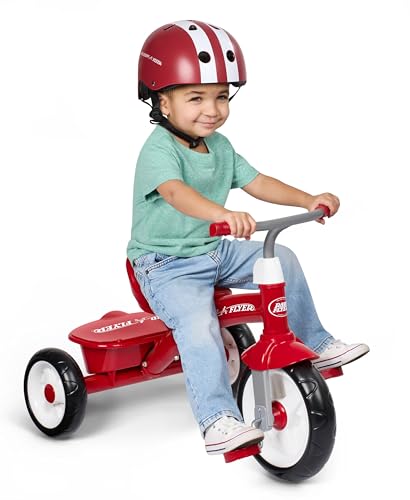
Five toddler trikes lined up by seat range, weight, and stability features, with a clear winner for a 3 year old and three conditions that flip the pick.

By Travis WaltersUpdated 14 min read
On this page
- Best tricycle for a 3 year old at a glance
- How I narrowed the field to five trikes
- Does the 3-year-old label actually mean anything?
- What decides a toddler trike: seat range, not looks
- 1. Radio Flyer Red Rider Trike — Best overall
- 2. KRIDDO Toddler Tricycle (Tool-Free) — Runner-up
- 3. Umatoll Tricycle — Best budget pick
- 4. KRIDDO Tricycle with Rubber Front Wheel — Best for pros
- 5. Radio Flyer Big Flyer Sport — Best premium
- When a different trike wins
- What the listings leave out
- The verdict
- FAQ
The best tricycle for a 3 year old is the Radio Flyer Red Rider Trike, because its adjustable seat covers ages 2.5-5 and the whole trike weighs just 9.9 lb, so a small three can start and keep riding it for a year or more. If you want to skip assembly, the tool-free KRIDDO trike is the better buy. Here's the 30-second shortlist: the Red Rider wins on fit and carry weight, the KRIDDO runner-up wins on setup, and the Umatoll takes the value slot with dual baskets.
Best tricycle for a 3 year old at a glance
| Pick | Seat fits | Weight | Price |
|---|---|---|---|
Best overall Radio Flyer Red Rider Trike |
Ages 2.5-5 (claim) | 9.9 lb | Check Price |
Runner-up KRIDDO Tool-Free Trike |
Ages 2-5 (claim) | 9 lb | Check Price |
Best budget pick Umatoll Tricycle |
Ages 2-5 (claim) | 9.59 lb | Check Price |
Best for pros KRIDDO Rubber Front Wheel |
Ages 2-5 (claim) | 9.15 lb | Check Price |
Best premium Radio Flyer Big Flyer Sport |
Ages 3-7 (claim) | 10.5 lb | Check Price |


How I narrowed the field to five trikes
I compared the published specifications for every trike side by side. That means seat range, weight, footprint, warranty, and the stability claims each brand makes. I did not touch a single one. What I did do was line up the numbers so you can see where they actually differ.
Two things cut the field fast:
- Footprint. A trike that measures 49.4 x 55.6 x 21 in is a very different object from one that measures 20.9 x 26 in. The oversized one earns its own use case rather than a place next to the standard trikes.
- Weight. All five land between 9 lb and 10.5 lb, close enough that a small child can help walk any of them back up the drive.
Here's how the five sort out:
- Standard toddler trikes built around a low seat and a small front wheel: the Red Rider, both KRIDDOs, and the Umatoll.
- The oversized chopper, the Big Flyer Sport, with a 16-inch front wheel and a much longer body.
Everything survived the screen because every listing publishes the seat range and the weight, the two figures that decide the buy. That is the whole point of this guide.
Does the 3-year-old label actually mean anything?
Short answer: not exactly. None of these five is sold as a strict 3-year-old trike. Amazon returned them because their ranges overlap age three, not because any brand certifies the fit. So treat the age label as a starting hint, not a promise.
Four of the five claim a range that begins at two: ages 2.5-5 for the Red Rider, ages 2-5 for both KRIDDOs and the Umatoll. The Big Flyer Sport claims ages 3-7, which puts a typical three near the bottom of its range instead of the middle.
The practical read is inseam, not birthday. A three can be small or tall, and a seat range only helps if the low end sits under your child. That's why the best tricycle for a 3 year old is usually one whose range starts at two: it gives you slack on both ends. Measure the seat height against your child's inside leg before you commit, because the listing can't do that for you.
What decides a toddler trike: seat range, not looks
Most trike guides push wheel size and paint colour. Those are the things a photo shows. They are not what decides whether your three-year-old rides the thing next spring.
The deciding specification is seat range, because a three-year-old grows fast and a trike that fits in March may be tight by autumn. The Red Rider's claimed 2.5-5 window is the widest cushion here for a small three. The KRIDDOs and Umatoll all claim 2-5, which is close.
Weight decides the rest. When a child stalls halfway down the block, someone carries the trike home. At 9 lb the KRIDDO runner-up is the lightest of the five; the Big Flyer Sport is heaviest at 10.5 lb. Every pick sits in a narrow band, so the carry is manageable across the board.
A few figures worth having in mind:
- Seat ranges cluster at 2-5, with one 2.5-5 and one 3-7.
- Weights run 9 lb to 10.5 lb.
- Footprints run from about 18 in deep to 55.6 in long.
Read those three lines and you've read the whole category.
1. Radio Flyer Red Rider Trike — Best overall
The Red Rider is the best tricycle for a 3 year old because its claimed 2.5-5 seat range gives a small three the most room to grow, and at 9.9 lb it's still easy to carry home.
Best for: a 3 year old just building pedal confidence Skip it if: you want a big-kid chopper look
What sets the Red Rider apart in this set is its fit window. Radio Flyer states the adjustable seat covers ages 2.5-5, the only range here that starts below three, which means a smaller child gets a real fit today and a taller one keeps riding it. The footprint is compact at 19.7 x 26.4 x 19.9 in, so it stores in a garage corner without dominating it.
Radio Flyer says the frame is steel with quiet-ride wheels and comfort-grip handlebars. There's a covered rear storage bin the listing describes for toys and snacks, plus a seat-back hand grip to make curb lifts and car trips easier. It's also the one pick here with a warranty you can extend: the base one year stretches to two years by registering at the brand's site.
The trade-off is price. This is a premium-positioned pick, more expensive than three of the four rivals, and it carries only one storage bin against the Umatoll's two. You pay for the fit range and the brand's warranty path, not for extra baskets.
Pros:
- Widest claimed fit window, ages 2.5-5
- Warranty extendable to 2 years by registering
- Compact 19.7 x 26.4 in footprint for storage
- Covered rear bin and carry grip per the listing
- Light at 9.9 lb for curb lifts
Cons:
- Premium price, dearer than three rivals here
- Only one storage bin, versus the Umatoll's two
- Plain classic styling, not the chopper look
- Base warranty is one year unless you register
2. KRIDDO Toddler Tricycle (Tool-Free) — Runner-up
The tool-free KRIDDO is the runner-up because it assembles without tools and is the lightest pick at 9 lb, so it's the easiest of the five to set up and haul.

Best for: parents who hate assembly Skip it if: you need front and rear storage
This is the trike to pick when you don't want to spend a Saturday morning with an Allen key. KRIDDO builds the tool-free assembly right into the name, and at 9 lb it's the lightest of all five here. Its footprint is nearly square at 21.7 x 21.5 x 21.5 in, so it tucks into a small hallway or car boot better than the longer bodies.
KRIDDO claims a triangular frame with extended rear wheels and a wider wheelbase to help prevent tipping while a child is learning. The listing also describes shock-absorbing silent wheels for indoor use that won't mark floors, plus a comfier seat and an easy-carry design. It ships with a one-year warranty against manufacturer defects.
The catch is storage: this model doesn't list front or rear baskets, so there's nowhere for your three-year-old to stash a favourite toy. Only one seller stocks it, too. If you want carrying capacity, the Umatoll or the Red Rider serves your child better.
Pros:
- Tool-free assembly, no hardware needed
- Lightest pick here at 9 lb
- Compact near-square 21.7 x 21.5 in footprint
- Silent wheels claimed for indoor use
- One-year warranty against defects
Cons:
- No storage baskets listed
- Only one seller stocks it
- Fit range starts at two, not below
- Fewer standout features than the front-light model
3. Umatoll Tricycle — Best budget pick
The Umatoll is the best budget pick because it's the cheapest of the five yet still adds dual removable baskets and no-battery light-up wheels.

Best for: spending the least while still getting storage Skip it if: you want a published warranty
The Umatoll is the cheapest trike in this set and, of the five, it's the one buyers reach for most often here. That combination is rare at the entry price. It weighs 9.59 lb and measures 20.4 x 26.3 x 18 in, right in line with the standard trikes.
Umatoll says the frame is carbon steel with spring buckles and reinforced screws, and the trike claims extended rear wheels and a wide wheelbase to resist tipping. The feature that stands out for a three-year-old: removable front and rear baskets, the only dual-basket setup among these five. It also claims rear wheels that light up as they turn with no batteries, described as working indoors or out.
Where it falls short is the paperwork. The listing publishes no warranty, while three rivals state a one-year term. It also claims a fit range starting at two rather than below, so a very small three gets less growing room than the Red Rider offers. You trade the warranty for the low price and the extra basket.
Pros:
- Cheapest of the five picks
- Only dual-basket setup here, front and rear
- No-battery light-up rear wheels per the listing
- Carbon-steel frame with reinforced screws claimed
- Light at 9.59 lb
Cons:
- No warranty published
- Fit range starts at two, not below
- Single colour listed, pink only
- Claims unverified beyond the listing
4. KRIDDO Tricycle with Rubber Front Wheel — Best for pros
This KRIDDO is the pick for a confident rider because it adds a rubber front wheel and a front light on top of the brand's tip-resistant frame.

Best for: a confident rider who wants a rubber front wheel Skip it if: you're on the lightest budget
Once a three-year-old has the pedalling down, this KRIDDO gives them a slightly more capable machine. It sits at the mid price here and weighs 9.15 lb, the second-lightest of the group. The footprint is 20.9 x 26 x 18.1 in, standard for a toddler trike.
The upgrades over its tool-free sibling are two the listing names clearly: a rubber front wheel and a front light. KRIDDO says the light adds visibility in low-light or evening rides, and the brand repeats its triangular frame with extended rear wheels and a wider wheelbase to help prevent tipping. There are shock-absorbing silent wheels claimed for indoor use, and the paint is described as BPA-free and matte non-toxic. It carries a one-year warranty, and three sellers list it, the most of any pick here.
The downside is value. It costs more than the tool-free KRIDDO without a wider fit range, and it doesn't add storage baskets. You're paying for the wheel and the lamp, so skip it if those don't matter to you.
Pros:
- Rubber front wheel for steadier steering
- Front light claimed for visibility
- Second-lightest pick at 9.15 lb
- One-year warranty against defects
- Three sellers list it, the most here
Cons:
- Dearer than the tool-free KRIDDO
- No wider fit range for the extra cost
- No storage baskets listed
- Fit range starts at two, not below
5. Radio Flyer Big Flyer Sport — Best premium
The Big Flyer Sport is the premium pick because its 16-inch front wheel and chopper body suit an older, bigger rider near the top of the age range.

Best for: an older sibling near the top of the age range Skip it if: your child is small for three
This is the outlier, and deliberately so. The Big Flyer Sport claims a 3-7 fit range, so a typical three sits at the very bottom of it rather than the middle. It's the most expensive pick here and the heaviest at 10.5 lb. The body is long, at 49.4 x 55.6 x 21 in, which is why it needs its own use case.
Radio Flyer describes a low-rider chopper design with an oversized 16-inch front wheel and performance grip tread meant to cut spinouts and steady the turns. There are chrome handlebars and a removable safety pennant the brand says helps spot the rider outdoors. It ships with a one-year warranty against defects and is the newest release here, from 2023.
The trade-offs are size and fit. A small three-year-old may not reach comfortably, and the long body eats storage space. It's the slowest seller of the five as well. Buy it for a child at the older end, or as a trike a three grows into over a couple of years.
Pros:
- Oversized 16-inch front wheel for stability
- Widest top-end fit, up to age seven
- Chrome handlebars and removable safety pennant
- Newest release, from 2023
- One-year warranty against defects
Cons:
- Most expensive pick here
- Heaviest at 10.5 lb
- Long 55.6 in body needs storage space
- Fit range starts at three, tight for a small child
When a different trike wins
The Red Rider is the default, but three concrete conditions flip the pick. Match your situation to one of these.
- If you refuse to assemble anything, the tool-free KRIDDO wins. It goes together without hardware and, at 9 lb, is the lightest here to carry once built.
- If price is the hard limit, the Umatoll wins. It's the cheapest of the five and still throws in front and rear baskets plus light-up rear wheels, which no other budget pick here matches.
- If your child is already a confident pedaler and near the older end, the Big Flyer Sport wins on its 16-inch front wheel and 3-7 range, so long as you have the 55.6 in of storage room.
The threshold that ties these together is fit. A small three needs a seat range starting below three, which points back to the Red Rider. A tall, older three has more freedom to chase features or price. Measure first, then pick the flip that fits.
What the listings leave out
Even with every specification lined up, a few things the listings don't state matter for a three-year-old.
- Pedal position. None of these details how far the pedals sit from the seat, and that reach decides whether short legs can push. Check it on arrival.
- Assembly time. Only the tool-free KRIDDO commits to a no-tool build. The others don't state how long setup takes, so budget an evening.
- Handlebar height. Seat adjustment is described, but handlebar reach isn't, and a stretched-out reach makes steering hard for a small child.
- Tyre type. Only the mid-price KRIDDO names a rubber front wheel. The others describe wheels without stating the material, so expect plastic unless the listing says otherwise.
Read the listing for what it does say, then plan to verify these four yourself. A trike that fits the specs on paper can still be a stretch in practice for a smaller three.
The verdict
Three tiers, one decision. At the entry level, the Umatoll wins: it's the cheapest pick, it adds dual baskets and light-up wheels, and it weighs a manageable 9.59 lb. The only real cost is that it publishes no warranty, so you're trusting the listing's claims.
In the middle, the picture splits by need. If assembly is your enemy, the tool-free KRIDDO at 9 lb is the answer. If you want a rubber front wheel and a front light for a confident rider, the mid-price KRIDDO earns the step up, backed by a one-year warranty and stocked by three sellers.
At the premium end sits the Red Rider, and it's the overall winner for a reason. Its claimed 2.5-5 seat range is the only one here that starts below three, which is exactly the cushion a small three-year-old needs. Add the 9.9 lb carry weight and a warranty you can extend to two years, and it's the safest default. The runner-up KRIDDO's exact advantage is setup and weight: tool-free and a pound lighter, but without the Red Rider's wider fit window or extendable warranty.
FAQ
Is a tricycle worth it for a 3 year old?
A tricycle is worth it for a 3 year old who's ready to pedal, since it builds steering and coordination on a stable three-wheel base. Four of these five claim fit ranges starting at two, so a three sits comfortably in the middle. Match the seat range to your child's inseam and it earns a year or more of use.
What is the best tricycle for a 3 year old on a budget?
The best tricycle for a 3 year old on a budget is the Umatoll. It's the cheapest of the five picks here and still includes removable front and rear baskets plus rear wheels that light up without batteries, per the listing. It weighs 9.59 lb. The one gap is warranty: the listing publishes none, while three rivals state a one-year term.
How does the Radio Flyer Red Rider compare to the KRIDDO tool-free trike?
The Radio Flyer Red Rider compares to the KRIDDO tool-free trike on fit and setup. The Red Rider claims a wider 2.5-5 seat range and offers a warranty extendable to two years. The KRIDDO wins on assembly, going together without tools, and is lighter at 9 lb versus 9.9 lb. Choose the Red Rider for fit range, the KRIDDO to skip the build.
What seat range should I look for in a 3 year old's tricycle?
The seat range you look for should start below age three so a smaller child fits today and grows into the rest. The Red Rider's claimed 2.5-5 is the only range here that dips under three. The others start at two as well, except the Big Flyer Sport, which begins at three and suits an older, bigger rider.
What mistake do parents make buying a toddler tricycle?
The mistake parents make buying a toddler tricycle is picking by looks or wheel size instead of seat range and pedal reach. A striking chopper like the Big Flyer Sport, with its 16-inch front wheel and 3-7 range, can leave a small three stretching. Measure your child's inseam against the seat height first, then judge features.
Measure your child's inside leg tonight, then match it against the seat range before you order anything. That one step tells you more than any photo. For most three-year-olds the Red Rider is the right default: its claimed 2.5-5 window starts below three, so a smaller child gets a real fit now and keeps riding as they grow, and at 9.9 lb you can still lift it over a curb one-handed. If assembly or price rules your choice, the tool-free KRIDDO and the budget Umatoll are the two names to check next.