Best Siding for Tiny House: Miniature Picks
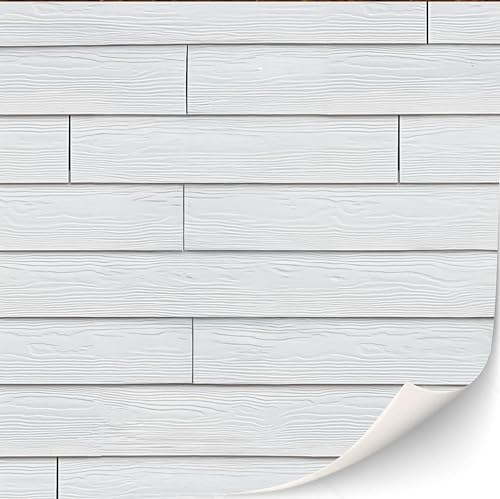
Seven miniature siding options for dollhouse-scale tiny house builds, ranked by coverage, scale accuracy, and how much prep work each one demands before it hits the wall.

By Travis WaltersUpdated 16 min read
On this page
- Best siding for tiny house at a glance
- A quick note on scale before you buy
- How I cut the field down to seven
- 1. TexturKontor 3 Sheets Self-Adhesive Wall Cladding — Best overall
- 2. Generic 1/2 Inch Miniature Dollhouse Wood Siding (24 in) — Best upgrade
- 3. Generic 1/2 Inch Miniature Dollhouse Wood Siding (1:24, Light Brown) — Best minimal setup
- 4. Greenleaf 1/2 in Scale Clapboard Siding — Best for pros
- 5. MAQIHAN 12 Pcs Vinyl Siding Repair Kit — Best budget pick
- 6. VOSAREA Dollhouse Trim — Best large-capacity
- 7. Wenqik Strips Dollhouse Roof Shingles — Best premium
- Self-adhesive or raw wood: which suits your build?
- How much wall will one pack actually cover?
- What should you look for in miniature siding?
- Common mistakes first-time builders make
- The verdict
- FAQ
The best siding for tiny house builds at 1:12 dollhouse scale is TexturKontor's self-adhesive wall cladding, a three-sheet pack of 8.2 x 11.6 in white wood-siding film that peels and sticks straight onto a wall panel. If you want real 1/2 in birch strips to stain yourself, Greenleaf's 60-strip pack covering 90 sq in is the better pick. Everything ranked below is miniature siding for scale-model tiny houses, not full-size cladding.
Best siding for tiny house at a glance
| Pick | Format | Coverage | Price |
|---|---|---|---|
Best overall TexturKontor Self-Adhesive Wall Cladding |
Printed self-adhesive film | 3 sheets, 8.2 x 11.6 in each | Check Price |
Best upgrade Generic 1/2 in Wood Siding, 24 in |
Raw wood lap siding | 1 board, 3.5 x 24 in | Check Price |
Best minimal setup Generic 1/2 in Wood Siding, 1:24 |
Light-brown wood lap siding | 1 board, 3.5 x 24 in | Check Price |
Best for pros Greenleaf Clapboard Siding |
60 laser-cut birch strips | 90 sq in total | Check Price |
Best budget pick MAQIHAN Vinyl Siding Repair Kit |
Full-size PVC patches | 12 patches, 6.3 x 4.7 in | Check Price |
Best large-capacity VOSAREA Dollhouse Wall Panel |
One-piece wood panel | 14.6 x 3.35 in | Check Price |
Best premium Wenqik Fish-Scale Shingles |
Wood roof shingle strips | 50 strips, 4.25 x 1.14 in | Check Price |


A quick note on scale before you buy
A quick word on what this roundup covers, because the phrase can mean two very different things. A tiny house at full size is a real building, and its cladding is measured in feet, sheathing grade, and R-value. That is not what Amazon returns for this search. What comes back is siding for scale models: 1:12 and 1:24 dollhouse pieces, laser-cut birch strips, printed adhesive film, and one full-size vinyl repair kit that arrived by accident.
So this guide is honest about what it is. It is the best siding for tiny house model builds, plus one full-size vinyl patch kit for anyone repairing an actual small dwelling. If you are cladding a real 200 sq ft build, none of the miniature products here will help you and you should be pricing LP SmartSide, cedar bevel, or fibre cement at a lumberyard. If you are building a scale tiny house, read on.
How I cut the field down to seven
Three reasons a listing did not make the cut, before the survivors got ranked.
First, mismatched category. Several results were furniture, dollhouse kits, or roofing paper rather than wall cladding. Those went, because a roundup called siding needs to be siding.
Second, missing scale. A miniature siding product without a published scale is guesswork for the buyer. Every pick here states either 1:12, 1:24, or a specific strip width. The one exception is the MAQIHAN vinyl repair kit, which is a full-size product and is labelled as such throughout.
Third, unusable coverage. Anything with dimensions too small to clad even one wall of a scale build was cut. Every remaining pick states its coverage: three 8.2 x 11.6 in sheets, a 3.5 x 24 in board, 60 strips over 90 sq in, and so on.
What survived was seven listings that publish enough dimensional detail to plan a build around. Ranking then came down to scale fidelity, coverage per pack, and how much prep work sat between opening the box and sticking siding on a wall.
1. TexturKontor 3 Sheets Self-Adhesive Wall Cladding — Best overall
The fastest path from a bare wall panel to a finished white clapboard look on a 1:12 tiny house build.
Best for: 1:12 builders who want a finished white clapboard look with no painting Skip it if: you want raw wood you can stain yourself
The TexturKontor pack ships three DIN A4 sheets, each 8.2 x 11.6 in, with a self-adhesive backing and a high-resolution white wood-siding print on the front. That is the whole proposition, and for a first-time tiny-house builder it is a strong one. You cut to fit with a hobby knife and press onto your wall panel: no glue, no clamps, no finishing.
Coverage is the honest limit. Three sheets is roughly 285 sq in of siding, so a small 1:12 tiny house with modest walls fits inside a single pack; a larger build needs two. The listing calls the film self-adhesive, so seams will need careful alignment on the way down. It is the most expensive of the film option in the set, and there is no stated warranty, but the trade you are making is prep time for money.
Pros:
- Peel-and-stick backing, no glue needed
- Three DIN A4 sheets in one pack
- Printed white clapboard finish, no painting
- 1:12 scale, the most common dollhouse size
Cons:
- Premium price position in this set
- No raw-wood option, print only
- Seam alignment matters on adhesive film
2. Generic 1/2 Inch Miniature Dollhouse Wood Siding (24 in) — Best upgrade
A single 24 in raw-wood lap-siding board for builders who want to stain or paint the finish themselves.
Best for: builders who want long, unbroken 24 in runs of raw wood Skip it if: you cannot cut and finish wood yourself
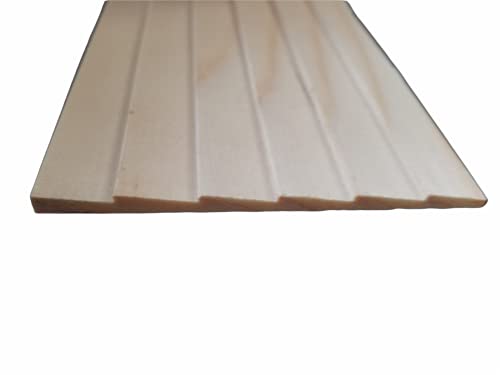
This one is raw wood, shipped unfinished, 3.5 in wide by 24 in long and 0.125 in thick. That length matters: a 24 in run lets you clad a long wall of a 1:12 tiny house without a horizontal seam, which is the single ugliest thing that can happen to a clapboard elevation. The listing calls it 1/2 in dollhouse or train miniature siding, so the strip spacing is set for 1:24-scale reading at half-inch equals one foot.
Because it arrives unfinished, you own the colour. Stain it cedar, paint it barn red, whitewash it: the wood takes finish well and you can seal it before glue-up. The trade is obvious. This is not a peel-and-stick product. You need a saw for cutouts, a suitable adhesive, and patience for the finish coats. It is the third-cheapest of the seven, so the upgrade sits in the labour, not the money.
Pros:
- One long 24 in board, no horizontal seams
- Real wood, takes stain or paint
- 0.125 in thickness matches scale trim
- Third-cheapest of the seven picks
Cons:
- Ships raw, needs finishing
- Requires glue and cutting tools
- No stated warranty in the listing
3. Generic 1/2 Inch Miniature Dollhouse Wood Siding (1:24, Light Brown) — Best minimal setup
A 24 in raw-wood siding board pre-toned light brown, aimed at 1:24 half-scale tiny house models.
Best for: 1:24 half-scale projects that need a warmer tone out of the pack Skip it if: you are building at 1:12 scale
Same 3.5 x 24 in footprint as the raw board above, same 0.125 in thickness, but the listing states 1:24 scale and a light-brown colour rather than raw. If your tiny house model is half-scale, this pack drops the finishing step: you glue it up and it already reads as warm timber siding. That is the minimal-setup pitch, and it is a real one for anyone who wants wood without a staining session.
Set position is middle. It is the fourth-cheapest of the seven and sits between the premium film and the entry-level raw board on price. The trade against pick 2 is control: you lose the ability to choose a stain colour, and you gain the finished tone straight from the mailer. Against pick 1, you gain real wood and lose the peel-and-stick backing. Cutouts and glue-up are on you. Scale is 1:24, not 1:12, so double-check your model before buying.
Pros:
- Light-brown tone, no staining required
- Full 24 in board length
- Real wood at 1:24 scale
- Mid-range price position in this set
Cons:
- 1:24 scale only, wrong for 1:12 builds
- Still needs glue and cutting
- No published warranty
4. Greenleaf 1/2 in Scale Clapboard Siding — Best for pros
Sixty laser-cut birch strips at true 1/2 in equals one foot scale, for builders who want a proper clapboard elevation.

Best for: experienced hobbyists working in true 1/2 in scale Skip it if: you dislike gluing 60 individual strips
Greenleaf is the traditional path. The pack contains 60 precision laser-cut unfinished birch strips, each measuring 6 in by 3/8 in, and the set covers roughly 90 sq in of wall at half-inch equals one foot. Ship weight is 1 lb, and it is one of only two picks in this set with a published warranty: 90 days from date of purchase. That is a small thing, but no other maker states one at all.
The strips glue up one by one, overlapping to form the clapboard. This is slow work and it looks like a real building when it is done, because it is built the same way. It is the second-cheapest of the seven, so the cost of a proper clapboard elevation is your time. Skip it if you are working fast or at a different scale, because the 1/2 in equals one foot ratio has to match your build. The 90 sq in coverage is enough for a small tiny-house model or one big feature wall.
Pros:
- 60 laser-cut birch strips, glue-and-stack
- Second-cheapest of the seven
- 90 sq in coverage stated
- One of only two picks with a warranty
Cons:
- Slow gluing, one strip at a time
- Unfinished birch needs sealing
- Only 90 sq in per pack
5. MAQIHAN 12 Pcs Vinyl Siding Repair Kit — Best budget pick
A 12-piece PVC patch kit for full-size vinyl siding repairs, included here for readers with an actual small building rather than a model.

Best for: repairing damaged panels on a full-size structure, not a miniature Skip it if: you are building a dollhouse-scale tiny house
This is the odd one out and it belongs on the list only because a lot of tiny-house owners live in real ones. The kit contains 12 PVC patches at 6.3 x 4.7 in each, in paintable white, with adhesive backing. MAQIHAN calls it a fix for cracked panels, small holes, or damaged skirting, and paints up to match existing colour. It is the cheapest of the seven by a clear margin.
For a scale-model build this is the wrong product. The patches are enormous next to a 1:12 wall, they are printed as flat panels rather than lap siding, and PVC does not glue nicely to a wooden model. Buy it if a real tiny house has a cracked panel or two, and buy anything else in this roundup if you are working on a dollhouse. The listing mentions waterproofing and tear resistance, which are useful outdoors but irrelevant on a shelf.
Pros:
- Cheapest of the seven picks
- 12 patches per kit
- Paintable to match existing siding
- Adhesive backing, no glue required
Cons:
- Full-size product, not miniature
- Wrong scale for any model build
- PVC does not bond well to wood
6. VOSAREA Dollhouse Trim — Best large-capacity
A single 14.6 x 3.35 in wooden panel in white, useful for one long wall on a 1:12 tiny house.

Best for: builders needing one wide 14.6 x 3.35 in panel for a single wall Skip it if: you need to cover several walls with one purchase
VOSAREA sells one panel per pack, measuring 14.6 x 3.35 x 0.12 in and weighing 1.76 oz. The listing calls it a 1:12 scale wall element and dollhouse trim, painted white, made of lightweight wood. The pitch is a single continuous face: no strip alignment, no seams down the middle, just cut to size and mount. VOSAREA says it takes paint or stain if the factory white is not what you want.
The catch is the "large-capacity" award. That means large in a single dimension. Total coverage is about 49 sq in, which is less than Greenleaf's 90 sq in and less than one TexturKontor sheet. So this is best used for one prominent wall or a wainscoting run, not a whole build. It is the most expensive of the six miniature picks here for less coverage than several cheaper options, which is the trade you make for a pre-painted one-piece panel.
Pros:
- Single-piece 14.6 x 3.35 in panel
- Pre-painted white finish
- Lightweight wood, takes repaint or stain
- 1:12 scale, matches most dollhouse builds
Cons:
- Highest price position among miniature picks
- Only 49 sq in of coverage per pack
- Not enough for a full multi-wall build
7. Wenqik Strips Dollhouse Roof Shingles — Best premium
Fifty taupe wooden fish-scale shingle strips for the roof of a 1:12 build, not the walls.

Best for: adding a taupe fish-scale roof or gable accent to a 1:12 build Skip it if: you want siding for the main walls, not the roof
The Wenqik pack is not siding in the strict sense. It is 50 wooden fish-scale shingle strips, each 4.25 x 1.14 in, in a taupe finish, at 1:12 scale. Each strip carries eight individual shingles, so 50 strips gives you 400 shingles worth of coverage. Wenqik states the shingles are non self-adhesive, so you supply the glue. That is a real trade-off against picks 1 and 6, and it earns a mention up front.
Why it is on a siding list: on many tiny-house models the roof shows more than any single wall, and a proper shingled roof or a gable accent lifts the whole build. Use these on the pitched surfaces and clad the walls with one of the flat siding options above. The finish is factory taupe and takes paint if you want a different colour. It is the most expensive pick in the set and the trade you accept is having to combine two products to finish a build.
Pros:
- 50 strips, 400 shingles total
- Fish-scale profile at 1:12 scale
- Factory taupe finish, no staining required
- Ideal for pitched roofs and gables
Cons:
- Highest price position in the set
- Non self-adhesive, glue required
- For roofs, not wall siding
Self-adhesive or raw wood: which suits your build?
This is the question that actually decides the best siding for tiny house model builds. Not brand, not price. Format.
Self-adhesive film, like the TexturKontor sheets, is fast. You measure, cut, peel, press. A wall goes on in minutes, the finish is already there, and you never open a stain jar. The trade is a printed surface: up close, in raking light, it reads as paper on wood. At normal shelf viewing distance it looks like painted clapboard.
Raw wood, like the two Generic 24 in boards and the Greenleaf strips, takes longer and looks like a real building when it is done. You choose the finish. You control weathering. You can sand a bad seam smooth. The trade is time and tools: a hobby knife, wood glue, clamps, a small saw for cutouts, and a session at the finish bench.
Rule of thumb: first build, or a display piece for someone else, film. Second build onward, or a piece you plan to keep, wood. If you are painting the model white regardless, the TexturKontor film is faster to a finished wall than any painting job you can do at home.
How much wall will one pack actually cover?
Coverage is where listings get vague and buyers get caught. Here is what the seven packs actually deliver, converted where needed.
- TexturKontor: 3 sheets at 8.2 x 11.6 in equals roughly 285 sq in of clad wall.
- Generic 24 in raw board: 3.5 x 24 in equals 84 sq in per board.
- Generic 24 in light brown 1:24 board: 3.5 x 24 in equals 84 sq in per board.
- Greenleaf: stated at 90 sq in across 60 strips.
- MAQIHAN: 12 patches at 6.3 x 4.7 in equals roughly 355 sq in, for full-size repairs.
- VOSAREA: one panel at 14.6 x 3.35 in equals roughly 49 sq in.
- Wenqik: 50 strips at 4.25 x 1.14 in equals roughly 242 sq in of shingled area.
A 1:12 tiny house with, say, four walls at 10 x 8 in each is 320 sq in of exterior. That means one TexturKontor pack almost does it, four Generic boards do it with cutting, or three-plus Greenleaf packs cover it. Buy for coverage, not for count.
What should you look for in miniature siding?
Five checks before you add anything to cart.
- Scale, first. 1:12 is standard dollhouse. 1:24 is half-scale. They do not mix on one build.
- Coverage in square inches, not piece count. 60 strips sounds like a lot until you see the 90 sq in it covers.
- Finish state. Ask whether it ships raw, painted, or printed. Each demands different tools.
- Adhesive. Self-adhesive, glue-required, or PVC-adhesive backing all behave differently on wood.
- Thickness. Above about 0.15 in, siding starts to look bulky against scale trim and window frames.
Two secondary factors matter less but still count. Board length changes how many horizontal seams a wall shows: a 24 in board hides seams a 6 in strip cannot. And weight matters if the piece is going on a hanging or fragile substrate, though at these sizes nothing here is heavy.
Common mistakes first-time builders make
Three that come up over and over.
Buying full-size cladding by accident. Amazon lumps siding into one bucket and it is easy to end up with the MAQIHAN vinyl kit thinking it is a model product. Read the dimensions before the description.
Mixing scales on one build. A 1:12 wall next to a 1:24 window frame reads wrong to the eye even if you cannot say why. Pick a scale up front and stick to it across siding, trim, doors, and shingles.
Underestimating finishing time on raw wood. A 24 in raw board takes stain in about ten minutes but wants two coats and a seal, plus dry time. If your evening for the project is two hours, film beats wood every time.
The fourth, quieter mistake: forgetting the roof. If you are building the walls, plan the roof pack in the same order. The Wenqik shingle strips at 1:12 scale sit well over any of the 1:12 wall siding here, and matching the two purchases up front saves a second shipping wait.
The verdict
For a first-time 1:12 tiny house model build, the best siding for tiny house use is the TexturKontor self-adhesive wall cladding. Three DIN A4 sheets, a printed white clapboard face, and a peel-and-stick backing get one small build from bare panel to finished walls in an afternoon. It is the most sensible default in a category where most other picks demand glue, finishing, and time.
Two conditions flip that. First, if you want real wood you can stain, the Generic 24 in raw board at 3.5 in wide is the right buy: one long board, no horizontal seams, and full control over colour. Second, if you are working in true 1/2 in equals one foot scale on a display piece you plan to keep, Greenleaf's 60-strip birch pack is the traditional and correct choice, with 90 sq in of coverage and the only 90-day warranty in the set.
If you are repairing a full-size structure rather than building a model, the MAQIHAN vinyl kit is the only pick that fits, and it is the cheapest of the seven. Everything else on this list is scale-model siding.
FAQ
Is the best siding for tiny house model builds always the most expensive one?
The best siding for tiny house model builds is rarely the most expensive one in a set. TexturKontor sits in the premium band here and wins on speed rather than price. Greenleaf, the pro pick, is the second-cheapest of the seven. Coverage per pack, scale accuracy, and finish state matter more than price position, so buy on those three checks first.
Is it worth using self-adhesive film instead of real wood?
Using self-adhesive film is worth it for first builds, display pieces meant to be finished quickly, and anyone who does not own a hobby knife plus stain and glue. TexturKontor's three-sheet pack covers roughly 285 sq in and finishes in a single session. Real wood wins on close inspection and on pieces you plan to keep, because you control the finish and can hide a bad seam by sanding.
What scale should I match on a 1:12 dollhouse tiny house?
Scale on a 1:12 dollhouse tiny house should be 1:12 across siding, trim, and shingles. TexturKontor, VOSAREA, and Wenqik all state 1:12. Greenleaf and the raw Generic 24 in board are 1/2 in equals one foot, which is 1:24. The light-brown Generic board is also 1:24. Mixing 1:12 walls with 1:24 windows reads wrong immediately, so pick one scale and stick to it.
How does TexturKontor compare to Greenleaf for a shelf display?
TexturKontor compared to Greenleaf comes down to speed against realism. TexturKontor's 8.2 x 11.6 in film sheets peel and stick and finish white out of the pack. Greenleaf's 60 birch strips glue up one at a time to form a real clapboard elevation over 90 sq in, and the pack carries a 90-day warranty. For a fast display, TexturKontor. For a keeper piece under a lamp, Greenleaf.
What is the biggest pitfall when buying siding for a tiny house model?
The biggest pitfall when buying siding is picking a full-size product by accident. Amazon's siding search returns real-building materials, like the MAQIHAN vinyl repair kit with 6.3 x 4.7 in patches, alongside dollhouse packs. Check the stated scale, the dimensions, and the category path before you buy. If it does not say 1:12 or 1:24 somewhere, it is likely a full-size product and wrong for a model.
Whichever pick fits your scale, plan the whole envelope before ordering: walls, trim, and roof shingles want to arrive together so you can dry-fit the finished look before glue goes anywhere. Start with the TexturKontor film if you want to see a finished 1:12 wall by the weekend, and add the Wenqik shingle strips for the roof in the same order. The reason the film wins is not that it looks better than birch, because it does not. The reason is that a finished wall on Sunday beats an unfinished wall in a drawer.