Best RTF RC Plane: volantexrc 4CH Leads the Set

A ranked comparison of six ready-to-fly RC planes, from a 400mm park flyer to a 1.3m scale trainer, with the trade-offs each one makes against the rest of the set.

By Travis WaltersUpdated 15 min read
On this page
- Best RTF RC plane at a glance
- How I screened the RTF field down to six
- 1. volantexrc 4CH RC Plane — Best overall
- 2. HobbyZone Carbon Cub S 2 1.3m RTF Basic — Best premium
- 3. Harrisville Designs RC Airplane — Best budget pick
- 4. HobbyZone Sport Cub S 2 615mm RTF — Best upgrade
- 5. E-flite UMX Slow Ultra Stick RTF — Best minimal setup
- 6. FMS Ranger Reflex V3 1220mm — Best for pros
- What actually decides an RTF RC plane?
- Wingspan, weight and where you can fly them
- What's really in the box, pack by pack?
- Buying an RTF plane without regret
- The verdict
- FAQ
The best RTF RC plane in this set is the volantexrc 4CH Remote Control Airplane, a 400mm ready-to-fly trainer with three assist levels, a claimed 656 ft control range and a manufacturer-stated 20 minutes of flight time. The HobbyZone Carbon Cub S 2 1.3m RTF Basic is the pick if you already own a compatible LiPo battery and charger and want a 1.3m scale trainer with SAFE technology and a Spektrum DXS transmitter.
Best RTF RC plane at a glance
| Pick | Wingspan / size | What's in the box | Price |
|---|---|---|---|
Best overall volantexrc 4CH RC Plane |
400mm | Full RTF, transmitter batteries needed | Check Price |
Best premium HobbyZone Carbon Cub S 2 1.3m RTF Basic |
1.3m | Basic RTF, LiPo and charger sold separately | Check Price |
Best budget pick Harrisville Designs 2-Channel RC Plane |
38 x 32 cm | Plane, radio and 3 batteries | Check Price |
Best upgrade HobbyZone Sport Cub S 2 615mm RTF |
615mm | 100% complete, battery and charger included | Check Price |
Best minimal setup E-flite UMX Slow Ultra Stick RTF |
Ultra-micro | 6-channel Spektrum SLT6, 1S 150mAh LiPo, USB charger | Check Price |
Best for pros FMS Ranger Reflex V3 1220mm |
1220mm | RTF transmitter and receiver, three flight modes | Check Price |


How I screened the RTF field down to six
I started with the ready-to-fly (RTF) tag and stripped out anything that hid an assembly step behind the label. Then I lined up every published specification side by side: wingspan, weight, dimensions, transmitter type, what the box actually contains, and whether the plane arrives with a flight battery.
Three cuts followed. First, kits and bind-and-fly (BNF) planes went, because the reader searching for the best RTF RC plane is not looking for a plane that needs a separately bought transmitter. Second, planes with fewer than two documented flight modes went, because a single-mode plane forces a beginner and an experienced pilot to fly identical settings. Third, listings that would not disclose their control channel count went, since 2, 3 and 4 channel planes are different aircraft.
The six that survived split cleanly. Two are small trainers on 400mm or under. Two are mid-size wings between 600mm and 1.3m. One is an ultra-micro ultra-stick platform. One is a 1220mm reflex-wing plane aimed at intermediates. The volantexrc 4CH is the one buyers here choose most often, sitting well ahead of the rest on sales, and it is also the second-cheapest of the six.
1. volantexrc 4CH RC Plane — Best overall
A 400mm four-channel park flyer with three assist levels and a claimed 20 minutes per battery, at the second-lowest price position in this set.
Best for: a first-time pilot who wants a park flyer with a long single-charge session Skip it if: you want a scale-looking trainer with a longer wingspan
The volantexrc 4CH wins the set on the combination that actually decides a beginner RTF RC plane: four channels of control, staged assist, and a battery session long enough to learn something. The listing describes three flight control assists, a beginner level with full assist, an intermediate level with partial assist, and an expert level for manual control, which is the exact ladder a first pilot needs. Volantex says the Xpilot gyro handles self-stabilisation, and the 2.4GHz radio is rated at 656 ft.
Where the volantexrc pulls clear of the two small planes near it is completeness and reach. It is fully assembled and only wants transmitter batteries, and the manufacturer claims 20 minutes of flight time from a full charge, twice the 10 minutes the Harrisville Designs listing quotes. The trade-off is size and looks: at 400mm wingspan and 12.5 x 15.8 x 2 in shipping dimensions, it is a park flyer, not a scale trainer like the two Cubs.
Pros:
- Four channels with three assist levels for staged learning
- 656 ft radio range claim on 2.4GHz
- 20-minute flight time claim, longest here
- Fully assembled, ready out of box in about a minute
- Second-cheapest of the six
Cons:
- 400mm wingspan is small for gusty conditions
- No published weight in the listing
- No stated warranty
2. HobbyZone Carbon Cub S 2 1.3m RTF Basic — Best premium
A 1.3m scale trainer with SAFE technology and a Spektrum DXS transmitter, sold as a Basic pack that leaves you to supply a compatible LiPo battery and charger.

Best for: a returning hobbyist who already owns LiPo batteries and a charger Skip it if: you want a plane that flies straight out of the box with nothing to buy
The Carbon Cub S 2 is the largest plane here at a 1.3m wingspan and a 4.4 lb airframe, and it is the most expensive pick in the set. HobbyZone describes it as a scale trainer based on the Cub-Crafters Carbon Cub, and it carries the brand's SAFE technology, which the listing frames as a system to prevent crashes while a new pilot learns. Three flight modes, beginner, intermediate and experienced, are selected on the transmitter, and the radio is the Spektrum DXS on 2.4GHz DSMX.
Where it earns the premium slot is size and radio pedigree: a 1.3m airframe flies more predictably in wind than a 400mm park flyer, and the Spektrum DXS pairs into the wider Spektrum ecosystem. Where it loses ground against the Sport Cub S 2 lower down this list is that it is labelled RTF Basic. A compatible LiPo battery and charger are sold separately, and the listing is explicit about that.
Pros:
- 1.3m wingspan handles wind better than a park flyer
- SAFE technology with three flight modes
- Spektrum DXS 2.4GHz DSMX transmitter
- Scale styling based on the Carbon Cub
Cons:
- Battery and charger not included
- Most expensive of the six
- Slowest seller of this set
- 4.4 lb airframe is bulkier to transport
3. Harrisville Designs RC Airplane — Best budget pick
A two-channel EPP glider at 0.6 lb with a 3-axis gyro and three batteries in the pack, priced at the bottom of the set.

Best for: a curious buyer who wants to try RC flight cheaply with spare batteries in the box Skip it if: you want proportional throttle and rudder control on four channels
The Harrisville Designs plane is the cheapest of the six and the only one that ships with three batteries in the box. It is a lightweight design: a 38 x 32 x 8 cm airframe made of EPP foam, 0.6 lb boxed, with two coreless 716 motors doing the work. Harrisville quotes a 40-minute charge and a 15 to 20 minute flight time, and the listing says a 3-axis gyro is built into the ESC to keep the wings level automatically.
Two channels is the real constraint. You get throttle and directional control, not the full four-axis command set the volantexrc offers, so aileron and elevator practice waits for a different plane. In return, you get an aircraft light enough to hand-launch by throwing, cheap enough to treat as disposable while you learn, and enough packed batteries to keep flying while the last one recharges.
Pros:
- Cheapest pick in this set
- Three batteries in the box
- 0.6 lb EPP airframe absorbs beginner crashes
- 3-axis gyro for auto-levelling
- Hand-launch or slide-off take-off
Cons:
- Only two channels, no aileron control
- No published warranty
- Small airframe struggles in wind
4. HobbyZone Sport Cub S 2 615mm RTF — Best upgrade
A 615mm ultra-micro Cub that is 100% complete out of the box, with battery, charger and a RealFlight simulator trial included.

Best for: an ultra-micro flyer who wants everything in the box, including a battery and charger Skip it if: you want a full-size trainer for open fields
The Sport Cub S 2 is the upgrade over a first cheap trainer, and it is the plane in this set that best matches the promise of the RTF label. HobbyZone says the box is 100% complete: plane, transmitter, battery and charger, with nothing extra to buy, provide or assemble. The airframe is ultra-micro sized, small enough that the listing suggests flying it in parks, at sports fields or indoors over a basketball court. SAFE technology carries across from the larger Carbon Cub, and a trial of the RealFlight Trainer Edition simulator is included.
Compared with the 1.3m Carbon Cub, you lose scale wingspan and gain a real, working plane the day it arrives. Compared with the volantexrc, you gain gym-friendly indoor capability and lose the longer battery session the 400mm plane claims. The 615mm wingspan is where the trade-off sits: too small for a windy day, big enough for a still evening in a sports field.
Pros:
- Battery and charger included
- SAFE technology with staged flight modes
- Indoor-capable ultra-micro size
- RealFlight simulator trial in the box
Cons:
- Small wingspan limits outdoor conditions
- Second-slowest seller in this set
- No stated flight-time figure in the listing
5. E-flite UMX Slow Ultra Stick RTF — Best minimal setup
An ultra-micro slow-flyer with a 6-channel Spektrum SLT6 transmitter, a 1S 150mAh LiPo, a USB charger and a sim trial in one box.

Best for: a pilot who wants a 6-channel Spektrum radio and a sim trial in one box Skip it if: you want a small, light park flyer rather than an ultra-stick platform
The Slow Ultra Stick is the pick for a buyer who cares about the radio as much as the airframe. E-flite ships it as an ultra-micro platform with a 6-channel Spektrum SLT6 transmitter, 2.4GHz SLT technology, a USB-C port for use with RealFlight, a 1S 150mAh LiPo battery, and a USB charger. That is a lot of infrastructure in one box, and the RealFlight Trainer Edition trial that ships alongside means you can log stick time before the plane leaves the table.
The catch is context. This is the only pick in the set that sits under Unmanned Aerial Vehicles rather than Airplanes and Jets in its category listing, and E-flite positions it for yards, parks and indoor spaces such as garages or gymnasiums. It is a slow-flyer designed for tight, controlled airspace, not a windy park. If you already fly on Spektrum gear, the transmitter alone justifies its place. If you do not, you are paying for a radio you may not need yet.
Pros:
- 6-channel Spektrum SLT6 transmitter included
- 1S 150mAh LiPo and USB charger in the box
- RealFlight Trainer Edition trial included
- Indoor and yard-friendly slow-flyer
Cons:
- Ultra-stick shape suits practice more than scale flying
- Slow-flyer profile struggles outside in wind
- No published flight-time figure
6. FMS Ranger Reflex V3 1220mm — Best for pros
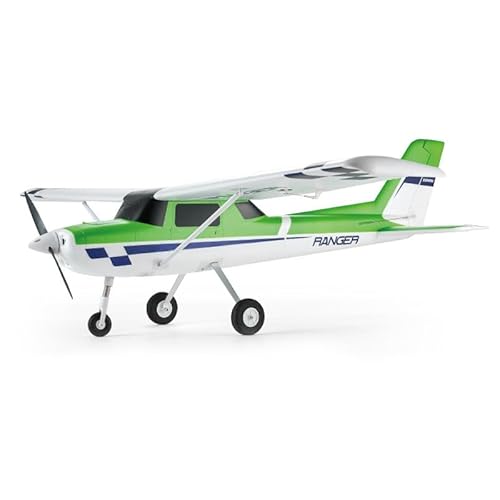
A 1220mm high-wing EPO plane with a reflex system, three flight modes and a complete RTF radio pack, aimed at pilots ready to leave beginner mode behind.
Best for: an intermediate flyer wanting a 1220mm reflex-wing platform with three modes Skip it if: you have never flown before and want the smallest, gentlest trainer
The FMS Ranger Reflex V3 is a 1220mm airframe, the second-largest here after the 1.3m Carbon Cub, built from EPO foam with a high-wing layout and what FMS calls a reflex system tuned for beginners. Three flight modes are on offer: Beginner Mode with self-stabilisation, Advanced Mode with enhanced stabilisation, and Off Mode for manual flying. FMS ships it with the RTF transmitter and receiver, and the listing notes no glue is needed at assembly.
Its award, best for pros, points at how the ladder works. A total beginner is better on the volantexrc or the Sport Cub S 2, both of which are smaller and more forgiving of a heavy landing. What the Ranger Reflex V3 offers is a bigger, faster platform with an Off Mode a beginner should not touch and an Advanced Mode that rewards a pilot who already knows how to trim a plane. The trade-off it makes against the Carbon Cub S 2 is that its listing publishes fewer specifications, with no weight and no released date.
Pros:
- 1220mm wingspan with high-wing layout
- Three modes including a full manual Off Mode
- EPO foam construction
- RTF transmitter and receiver included
Cons:
- No published weight in the listing
- Not a first-time-pilot airframe
- Second-most expensive of the six
What actually decides an RTF RC plane?
Most guides to the best RTF RC plane compare wingspan. Wingspan matters, but it is not the deciding criterion. The real question is how much of the flight system is inside the box.
RTF means ready-to-fly, and the promise is that a beginner can unpack, charge, and fly. Two of the six picks here honour that promise fully. The HobbyZone Sport Cub S 2 arrives 100% complete, battery and charger included. The E-flite Slow Ultra Stick ships a Spektrum SLT6 transmitter, a 1S 150mAh LiPo, and a USB charger together. The Harrisville Designs plane includes three batteries.
Two more are almost complete but need a small purchase. The volantexrc needs batteries for its transmitter. The FMS Ranger Reflex V3 does not detail its power pack in the specifications the listing publishes.
One is deliberately partial. The HobbyZone Carbon Cub S 2 1.3m is sold as an RTF Basic, and the listing is upfront: no LiPo battery, no charger. That is a legitimate choice for a returning hobbyist who owns Spektrum gear already, and a poor choice for a first-time buyer who reads RTF and expects to fly on day one.
Wingspan, weight and where you can fly them
Wingspan sets the airspace you need. Here is how the set breaks down:
- Under 500mm (park and small yard): the volantexrc 4CH at 400mm and the Harrisville Designs plane at 38 cm.
- 500 to 700mm (park, sports field, some indoor): the HobbyZone Sport Cub S 2 at 615mm.
- Ultra-micro slow-flyer (yards, garages, gyms): the E-flite Slow Ultra Stick.
- 1m and up (open field required): the FMS Ranger Reflex V3 at 1220mm and the HobbyZone Carbon Cub S 2 at 1.3m.
Weight tracks wingspan loosely, but not perfectly. The Harrisville Designs plane is 0.6 lb and the Carbon Cub S 2 is 4.4 lb, so the big scale trainer is more than seven times heavier than the small foam glider. That is why the small plane can be thrown to launch and the Cub cannot.
Two picks do not publish weight at all. The volantexrc 4CH lists dimensions of 12.5 x 15.8 x 2 in but no airframe weight, and the FMS Ranger Reflex V3 lists 9 x 41 x 15 in dimensions with no weight. In both cases the listing gives you enough to judge the shipping box but not the flying mass.
What's really in the box, pack by pack?
Three shapes of RTF pack show up in this set. It is worth naming them, because a buyer who reads "RTF" without checking the pack ends up disappointed.
- Fully complete pack. The plane, the transmitter, a flight battery and a charger are all in the box. The HobbyZone Sport Cub S 2 615mm RTF and the E-flite UMX Slow Ultra Stick RTF both fit here.
- Complete with spares. As above, plus multiple flight batteries. The Harrisville Designs plane ships three batteries, which is unusual at its price position.
- Basic pack. The plane and the transmitter are complete and bound, but a compatible flight battery and its charger are sold separately. The HobbyZone Carbon Cub S 2 1.3m RTF Basic is the only pick in the set that is explicitly labelled this way.
The volantexrc 4CH sits close to shape 1: the listing says it is fully assembled, that the plane is ready to take off within a minute of opening the box, and that only the transmitter's batteries need to be added. The FMS Ranger Reflex V3 lists an RTF transmitter and receiver but does not detail the flight battery position, so treat that one as needing a read of the current listing.
Buying an RTF plane without regret
A few practical checks before you order.
- Read the pack name in full. "RTF Basic" is not "RTF". If the listing says a LiPo battery and charger are sold separately, they are sold separately.
- Check the channel count against your ambition. Two channels teach direction and altitude. Four channels teach aileron and rudder. A 6-channel Spektrum SLT6 transmitter, like the one shipped with the Slow Ultra Stick, is aimed at pilots who plan to bind other Spektrum aircraft to it later.
- Match the wingspan to your flying site. A 1.3m Carbon Cub in a small yard will hit things. A 400mm park flyer on a windy sports field will fight the wind and lose.
- Look for staged flight modes. Four of the six picks here publish three-mode systems: volantexrc, Carbon Cub S 2, Sport Cub S 2 and FMS Ranger Reflex V3. That ladder is what lets one plane carry you from first flight to real stick time.
- Budget for spare batteries. Even the plane that ships with three, the Harrisville Designs, will eventually want more. A single flight battery is a short afternoon.
The verdict
The volantexrc 4CH is the best RTF RC plane in this set for a first-time buyer. It is a full four-channel airframe with three assist levels, a claimed 656 ft radio range, and a manufacturer-stated 20-minute flight time, at the second-lowest price position of the six. The listing says it is ready to fly within a minute of opening the box. That is the RTF promise honoured cleanly.
Two conditions flip the recommendation. If you already own a compatible LiPo battery, a charger and Spektrum gear, the HobbyZone Carbon Cub S 2 1.3m RTF Basic is the better buy: a 1.3m scale trainer with SAFE technology, a Spektrum DXS transmitter and three flight modes, at the most premium price position here. If you have never flown at all and want the cheapest possible way to try, the Harrisville Designs 2-channel plane ships with three batteries and a 15 to 20 minute flight-time claim, and it is the entry point of the set.
The FMS Ranger Reflex V3 waits at the top of the ladder for the day the volantexrc feels small.
FAQ
Is an RTF RC plane really ready to fly out of the box?
Is an RTF RC plane really ready in every case? Usually yes, sometimes no. Two picks here, the HobbyZone Sport Cub S 2 615mm RTF and the E-flite UMX Slow Ultra Stick RTF, ship 100% complete with a flight battery and charger. The volantexrc 4CH needs only transmitter batteries. The HobbyZone Carbon Cub S 2 1.3m RTF Basic is deliberately partial: no LiPo, no charger.
What's the difference between a 2-channel and a 4-channel RTF plane?
The difference between a 2-channel and a 4-channel RTF plane is how many control axes the radio commands. Two channels give you throttle and directional control, as on the Harrisville Designs plane. Four channels add aileron and elevator command, as on the volantexrc 4CH. Four channels teach a real flight-control repertoire; two channels teach direction and altitude only.
Is the HobbyZone Carbon Cub S 2 worth it over the Sport Cub S 2?
Is the HobbyZone Carbon Cub S 2 worth the step up over the Sport Cub S 2? It depends on your storage and site. The Carbon Cub S 2 is a 1.3m scale trainer at 4.4 lb, sold as RTF Basic without a battery. The Sport Cub S 2 is a 615mm ultra-micro that ships 100% complete. Bigger, more expensive, less convenient on day one.
How long does an RTF RC plane fly on one charge?
How long does an RTF RC plane fly on a full battery? It varies by airframe. The volantexrc 4CH listing quotes 20 minutes. The Harrisville Designs listing quotes 15 to 20 minutes with a 40-minute charge. The HobbyZone and E-flite listings in this set do not publish a single-figure flight time, so check the current listing before you plan your session.
What size RC plane should a total beginner start with?
What size RC plane suits a total beginner? Small and slow. A 400mm to 615mm foam trainer with a full beginner mode is easier to recover from a wobble than a 1220mm or 1.3m airframe. In this set that means the volantexrc 4CH at 400mm or the HobbyZone Sport Cub S 2 at 615mm, both with staged flight modes.
Pick the volantexrc 4CH if today is the day you want to fly. It is the most complete RTF pack of the six that still leaves you with a real four-channel plane to learn on, and its assist ladder means the same airframe carries you from a first hover in a car park to something closer to a controlled circuit. Order a second flight battery with it. The 20 minutes the listing quotes is not the afternoon, and a spare battery is the difference between a session that ends when you are ready and a session that ends when the plane runs out of power.