Best Baby Formula for a Newborn on Day One

A spec-by-spec look at six infant formulas sold for 0 to 12 months, sorted by what actually matters in week one: protein source, container size and how much mixing you can face at 3am.

By Travis WaltersUpdated 16 min read
On this page
- Best baby formula for newborn picks at a glance
- How six formulas made the cut and what got dropped
- Cow milk or goat milk: which protein suits a newborn?
- Powder or ready-to-feed for the first two weeks?
- 1. Similac 360 Total Care Baby Formula Powder — Best overall
- 2. Similac 360 Total Care Ready-to-Feed Baby Formula — Best budget pick
- 3. Kabrita Goat Milk Infant Formula Powder — Best premium
- 4. Bubs Whole Goat Milk Infant Formula — Best for heavy use
- 5. Earth's Best Organic Baby Formula — Most versatile
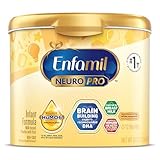
- 6. Enfamil NeuroPro Baby Formula — Best for families
- How long does one container actually last?
- What these listings will not tell you
- The verdict
- FAQ
The best baby formula for newborn feeding here is Similac 360 Total Care Powder, a 20.6 oz cow-milk tin from 2023 that covers the whole 0 to 12 month window without a switch. If you want zero mixing in the first week, the ready-to-feed 2 fl oz bottles in a pack of 12 are the smarter opening move. The specification that splits this field is not the nutrient list, because every one of these six is a complete infant formula. It is the protein source: four are cow milk, two are goat milk.
Best baby formula for newborn picks at a glance
| Pick | Protein source | Container size | Price |
|---|---|---|---|
Best overall Similac 360 Total Care Baby Formula Powder |
Cow milk | 20.6 oz powder | Check Price |
Best budget pick Similac 360 Total Care Ready-to-Feed Baby Formula |
Cow milk | 2 fl oz × 12 liquid | Check Price |
Best premium Kabrita Goat Milk Infant Formula Powder |
Goat milk (A2 claim) | 28 oz powder | Check Price |
Best for heavy use Bubs Whole Goat Milk Infant Formula |
Whole goat milk | 20 oz powder | Check Price |
Most versatile Earth's Best Organic Baby Formula |
Organic cow milk | 21 oz powder | Check Price |
Best for families Enfamil NeuroPro Baby Formula |
Cow milk | 20.7 oz powder | Check Price |


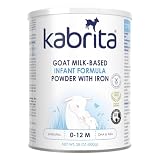


How six formulas made the cut and what got dropped
Three things knocked listings out before I started comparing them.
Reason one: no stated newborn age range. A tin labelled for toddlers or for 6 months and up is a different product with a different nutrient profile. Every pick here is sold for infants from birth, and two say so on the label itself: Bubs states 0 to 12 months, Earth's Best states 0 to 12 months.
Reason two: unusable listing data. If a listing published no container size and no weight, I could not compare it to anything. All six survivors publish a size in ounces.
Reason three: it was a supplement, not a formula. Toppers, thickeners and follow-on drinks are not what a newborn eats.
What survived splits cleanly into three groups:
- Cow-milk powder from a major label. Similac 360 Total Care at 20.6 oz, Enfamil NeuroPro at 20.7 oz, Earth's Best Organic at 21 oz. Three tins within half an ounce of each other.
- Goat-milk powder. Kabrita at 28 oz and Bubs at 20 oz, the only two non-cow options in the set.
- Ready-to-feed liquid. One entry, the Similac 2 fl oz twelve-pack, and it exists for a different job than the other five.
That grouping is the whole decision. Pick the group first, then the tin.
Cow milk or goat milk: which protein suits a newborn?
Cow milk or goat milk is the fork in the road, and four of these six sit on the cow side.
The goat-milk pair make the same argument in slightly different words. Kabrita's listing says goat milk has "naturally gentle A2 protein" and that goat milk proteins "form softer curds during digestion than cow milk proteins". Bubs says its whole goat milk formula "promotes smooth digestion" and allows "easier digestion compared to cow's". Those are manufacturer claims. I am repeating them, not confirming them.
Here is the part most shopping guides skip. A newborn who has no diagnosed cow milk protein issue does not need goat milk, and choosing it costs you shelf availability. Only two of the six picks here are goat-based, and Kabrita is the most expensive of the group.
Things that would push me toward goat milk:
- A paediatrician has already suggested trying a different protein source
- Cow-milk powder has produced feeding you want to change
- You want the largest container available here, which is Kabrita's 28 oz
Things that would keep me on cow milk:
- No feeding problems to solve yet
- You want the widest choice of tin sizes and formats
- You want a formula also sold ready-to-feed, which Enfamil's listing says exists
Start with what the paediatrician says at the first weigh-in. That conversation decides this, not a listing.
Powder or ready-to-feed for the first two weeks?
Powder or ready-to-feed is the second real decision, and it is a decision about your first fortnight rather than the whole year.
Ready-to-feed liquid is one pick here: Similac 360 Total Care in 2 fl oz bottles, a pack of 12, each bottle weighing 2 oz. No scoop, no water, no shaking. It is the cheapest pick in this set and it sells faster than anything else here, which tells you what parents reach for in week one.
Powder is the other five. Bubs prints the ratio on the tin: one unpacked, level scoop for each 2 fl oz of water, cap and shake until dissolved. Earth's Best says the container carries the water-to-formula ratio too. That is not difficult. It is just difficult at 3am on four hours of sleep.
My honest read: buy both. Twelve small ready-to-feed bottles cover the hospital bag and the drive home. A 20 oz to 28 oz tin covers everything after that. The mistake is buying only the liquid and discovering how quickly twelve 2 fl oz bottles disappear.
1. Similac 360 Total Care Baby Formula Powder — Best overall
The 20.6 oz cow-milk tin that covers a newborn's whole first year without a formula change, and the one I would default to.
Best for: parents who want one standard cow-milk powder for the whole first year Skip it if: you have been told to avoid cow milk protein
Within this set, this tin's advantage is boring in the best way. It is a mainstream cow-milk powder from 2023, in a 20.6 oz container measuring 5 x 5.95 x 4.32 in and weighing 1.29 lb. Nothing about it asks you to make a decision at 3am.
Similac lists an exclusive 5 prebiotic blend on the full title and states no rbGH and no rbST. That is the manufacturer's claim, printed on the label.
Two practical points push it to the top. First, this powder shares its name and formulation line with the ready-to-feed bottles below it, so you can run the liquid in week one and move to the tin without a protein change. Second, it sells faster than every other powder here, which matters when you are restocking a tin every couple of weeks.
The trade-off is price position. This is the more expensive of the two premium picks in the set, and its listing publishes only one feature claim where Enfamil publishes five and Kabrita five. You are paying for a widely stocked standard, not a longer specification sheet.
Pros:
- 20.6 oz container, near the middle of this set
- Same product line as the ready-to-feed bottles
- Fastest-selling powder among these six
- 2023 formulation, one of the newer here
- Stated no rbGH and no rbST
Cons:
- Premium price position for a mainstream cow-milk powder
- Only one published feature claim on the listing
- Smaller container than Kabrita's 28 oz
- Cow milk protein rules it out if that's the problem you're solving
2. Similac 360 Total Care Ready-to-Feed Baby Formula — Best budget pick
Twelve 2 fl oz bottles, no mixing, and the cheapest way into the best baby formula for newborn feeding in week one.

Best for: the hospital bag and the first week home Skip it if: you need a formula to feed for months
This is the only liquid in the set and the only pick that requires no preparation at all. Each bottle holds 2 fl oz and weighs 2 oz, and the pack contains 12. Released in 2023, same line as the winner above.
It is also the cheapest of the six and the one buyers choose most often here by a wide margin. That combination is not a coincidence. New parents buy small ready-to-feed bottles because the first days home are not the time to learn a scoop ratio.
Do the arithmetic before you commit, though. Twelve bottles at 2 fl oz each is 24 fl oz of finished formula in total. A newborn goes through that fast. This is a starter pack and a travel pack, not a month's feeding.
The trade-off against the five powders is straightforward: convenience per bottle, not value per ounce. Powder tins here run 20 oz to 28 oz of powder, which reconstitutes into far more finished feed than 24 fl oz. Buy this for the transition and buy a tin for the routine.
Pros:
- Zero preparation, no scoop or water needed
- Cheapest pick of the six
- Fastest-selling item in this set
- Pack of 12 bottles for hospital and travel
- Same product line as the winning powder
Cons:
- Only 24 fl oz of feed in the whole pack
- Highest cost per finished ounce of the six
- No published feature claims on the listing
- Twelve small bottles create more packaging waste than one tin
3. Kabrita Goat Milk Infant Formula Powder — Best premium
The largest container here at 28 oz, and the most thoroughly documented goat-milk option in the set.
Best for: parents choosing goat milk who want the largest container here Skip it if: budget is the deciding factor
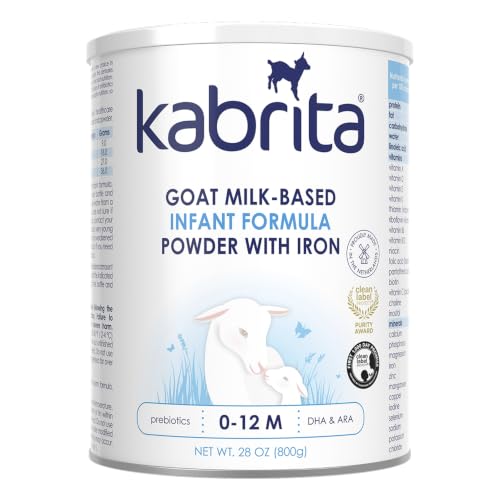
Kabrita gives you 28 oz of powder, 7.4 oz more than the next-largest tin in this comparison. The container measures 6.25 x 5 x 5 in and weighs 1.76 lb, and the formulation is dated 2024, making it the newest here alongside Bubs.
The listing makes specific claims worth repeating carefully. Kabrita says the goat milk has "naturally gentle A2 protein" and that goat proteins "form softer curds during digestion than cow milk proteins". It states the formula includes DHA and ARA, iron, vitamin D, prebiotics, beta-palmitate and lactose. It also says the product carries all three Clean Label Project certifications and is made in the Netherlands from family-run Dutch farms. All manufacturer statements.
That is the fullest published nutrient list of any pick here, and it is the reason this one earns the premium label rather than just wearing it.
The cost is exactly what you would expect. It is the most expensive pick of the six. If you have no reason to move away from cow milk, you are paying more for a protein source your newborn may not need. Buy it because a paediatrician pointed you at goat milk, not because the tin is bigger.
Pros:
- 28 oz, the largest container in this set
- Most detailed published nutrient list here
- 2024 formulation, newest alongside Bubs
- Stated A2 protein and three Clean Label Project certifications
- Made in the Netherlands under European standards
Cons:
- Most expensive pick of the six
- Goat milk unnecessary for most newborns
- Only two sellers list it
- Sells slower than the Similac powder despite the larger tin
4. Bubs Whole Goat Milk Infant Formula — Best for heavy use
A 20 oz whole goat milk tin at the cheaper end of this set, with the clearest preparation instructions published.

Best for: parents who want goat milk in a smaller, cheaper first tin Skip it if: you want the lowest cost per ounce of powder
Bubs is the second-cheapest pick here and the only one made with whole goat milk according to its listing. The tin holds 20 oz, weighs 1.25 lb, and is dated 2024. The label states it is for infants 0 to 12 months, which is one of only two picks to print that range explicitly.
The preparation instruction is spelled out on the listing and it is the most useful thing published on any of these six: wash hands, bottle, utensils and surfaces, then add one unpacked, level scoop for each 2 fl oz of water, cap and shake until the powder dissolves. That is the whole ritual, and knowing it before the tin arrives helps.
Bubs also states the formula is made in Australia, includes DHA/ARA plus omega-3 and omega-6, and contains no GMOs, corn syrup, artificial colours, flavours or preservatives. The brand describes itself as mum-founded and says it has been trusted by Australian families for nearly 20 years. Marketing copy, but specific marketing copy.
The trade-off against Kabrita is size. You get 8 oz less powder in the tin, so you will reorder sooner. It also sells slower than the Similac powder, so restocking may take more planning.
Pros:
- Second-cheapest pick of the six
- 2024 formulation, tied newest here
- Full scoop-to-water ratio published on the listing
- Stated no GMOs, corn syrup, artificial colours or preservatives
- Label states 0 to 12 months explicitly
Cons:
- 20 oz, the smallest powder tin in this set
- 8 oz less powder than Kabrita for a goat-milk buyer
- Only two sellers list it
- Goat milk is a solution to a problem most newborns don't have
5. Earth's Best Organic Baby Formula — Most versatile
The organic cow-milk tin built for parents who are breastfeeding and topping up rather than choosing one or the other.
Best for: parents combining breastfeeding with organic formula top-ups Skip it if: you want the newest formulation on this list
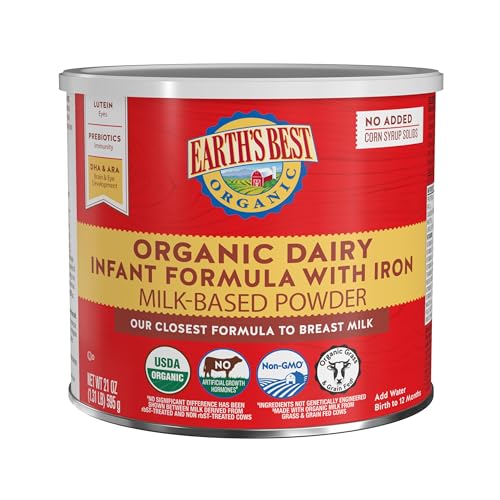
At 21 oz this is the largest cow-milk tin of the four here, in a compact 4.88 x 5.1 x 5.1 in container weighing 1.31 lb. It is roughly mid-range for this set on price, sitting between the two goat-milk tins and the Similac powder.
Earth's Best positions this one for mixed feeding directly. The listing says the formula is "great for supplementing breastfeeding or as a replacement", which is a different framing from every other pick and the reason it takes the versatile label. If you are not sure yet whether you will breastfeed exclusively, a tin explicitly sold for top-ups is a lower-commitment purchase.
The listing states organic milk from grass and grain-fed cows, plus lutein, prebiotics, DHA and ARA, iron, and no added corn syrup. It also says the container prints the water-to-formula ratio for bottle prep. Manufacturer claims throughout.
The clear weakness is age. This formulation dates to 2008, making it the oldest here by nine years. That is not automatically bad in infant nutrition, where standards are fixed, but it means you are not getting the newest blend. It is also the second-slowest seller in this group.
Pros:
- 21 oz, largest cow-milk tin here
- Only organic pick in this set
- Explicitly sold for supplementing breastfeeding
- Label states 0 to 12 months
- Stated no added corn syrup
Cons:
- 2008 formulation, oldest of the six by nine years
- Sells slower than four of the other five picks
- Smaller than Kabrita's 28 oz for the same shelf space
- Mid-range price with no size advantage over the cheaper goat tins
6. Enfamil NeuroPro Baby Formula — Best for families
The cow-milk powder with the longest published claim list and a stated ready-to-feed twin, but the least useful listing data here.

Best for: parents who want a formula also sold in ready-to-feed form Skip it if: you want a published price position to compare against
Enfamil NeuroPro is a 20.7 oz yellow container, 5.5 x 4.4 x 6.3 in and 1 lb, dated 2017. On paper the size sits almost exactly with the Similac and Earth's Best tins.
The listing carries the most claims of any pick here. Enfamil says the formula has MFGM components and DHA "also found in breast milk", and that MFGM components are "clinically shown to support cognitive, motor & communication development now through age 5 when fed through baby's first year". It says the formula includes prebiotics, iron, vitamins and minerals, and is designed for babies up to 12 months. It also states both ready-to-feed and powder options are available, which is genuinely useful for a household juggling daycare bottles and home feeds.
Read those claims as the manufacturer's, because that is what they are.
Two things put it last. This listing publishes no price position at all, so I cannot tell you where it sits against the other five, and that is a real gap when you are budgeting a year of tins. It also sells slower than every other pick here, and only one seller lists it. For a product line this well known, that combination is the weakest supply picture in the set.
Pros:
- Most published feature claims of the six
- 20.7 oz container, mid-size for this set
- Ready-to-feed version stated to exist
- Specific stated MFGM and DHA claims
- Designed for babies up to 12 months
Cons:
- No published price position to compare
- Slowest seller of all six picks
- Only one seller lists it
- 2017 formulation, second-oldest here
How long does one container actually last?
The tins here cluster tightly, which makes the outlier obvious.
- Kabrita: 28 oz
- Earth's Best: 21 oz
- Enfamil NeuroPro: 20.7 oz
- Similac 360 powder: 20.6 oz
- Bubs: 20 oz
- Similac ready-to-feed: 24 fl oz of finished feed across 12 bottles
Four powders sit within 1 oz of each other. Kabrita gives you 7 oz more than the largest of those four. If you are set on goat milk, that gap is the single biggest practical difference between the two goat options.
Bubs publishes the ratio that lets you estimate: one level scoop per 2 fl oz of water. Scoop weight is not listed, so I cannot turn ounces of powder into bottles for you, and I am not going to guess. What I can say is that no tin on this list is a month's supply for a newborn feeding every two to three hours. Plan on reordering, and plan on it sooner than the tin size suggests.
What these listings will not tell you
Four gaps are worth knowing before you click.
Scoop yield. None of the six publishes how many finished bottles a container makes. Bubs gives the ratio but not the scoop weight.
Warranty and returns. Not one of these six lists a warranty. That is normal for consumable infant nutrition, but it means the seller's own return policy is all you have.
Seller depth. Five picks show two sellers. Enfamil NeuroPro shows one. Fewer sellers means fewer fallbacks when a size goes quiet.
Whether "newborn" means anything here. It mostly does not, and this is the honest answer to the search. Bubs, Earth's Best, Kabrita and Enfamil all state coverage from birth to 12 months. None of these six is a newborn-specific formulation distinct from an infant formulation. The word "newborn" describes your baby's age, not a separate product category. Judge the fit yourself with your paediatrician rather than trusting a label to do it.
The verdict
If you have a healthy newborn with no diagnosed feeding issue, buy the Similac 360 Total Care Powder. It is a 20.6 oz cow-milk tin from 2023, it sells faster than any other powder here, and it shares a product line with the ready-to-feed bottles, so your first-week format and your long-term tin match. That continuity is worth more than any single claim on a label.
If a paediatrician has pointed you toward goat milk, buy Kabrita. It is 28 oz against Bubs' 20 oz, its 2024 listing publishes the fullest nutrient statement in this comparison, and it names its manufacturing origin in the Netherlands. You pay the most in this set for it.
The cutoff between those two tracks is a clinical one, not a shopping one: has anyone actually told you cow milk protein is a problem? If no, cow milk. If yes, goat milk.
Two conditions flip it. If you are still deciding whether to breastfeed exclusively, Earth's Best is sold specifically for supplementing, which makes it the low-commitment tin. And whichever track you pick, add the Similac ready-to-feed 12-pack for the hospital bag. It is the cheapest pick here and it removes mixing from the hardest week.
FAQ
Is the best baby formula for newborn babies worth paying premium prices for?
The best baby formula for newborn feeding does not have to be the most expensive. Two of these six sit at the entry level, including the fastest-selling pick in the whole set. Kabrita justifies its premium position with 28 oz of powder and the longest published nutrient list here. Similac 360 Total Care justifies its with format continuity. Neither is required for a healthy baby.
How long does a 20 oz baby formula container last a newborn?
How long a 20 oz container lasts depends on your baby's feeding volume, and none of these six listings publishes a bottle yield. Bubs states one level scoop per 2 fl oz of water but does not list scoop weight, so any figure I gave you would be invented. Assume a newborn feeding every two to three hours empties a tin faster than you expect, and reorder early.
Can I switch between these formulas after starting one?
Switching between these formulas is a question for your paediatrician, not a listing. What the data shows is that some switches are smaller than others. Moving from the Similac ready-to-feed bottles to the Similac 360 powder keeps the same product line and protein source. Moving from a cow-milk tin to Kabrita or Bubs changes the protein source entirely, which is a bigger change.
Kabrita or Bubs: which goat milk formula should I choose?
Kabrita or Bubs comes down to tin size against price. Kabrita gives 28 oz, publishes DHA, ARA, iron, vitamin D, prebiotics, beta-palmitate and lactose, and states three Clean Label Project certifications, but it is the most expensive pick here. Bubs gives 20 oz, is the second-cheapest of the six, and prints its full scoop ratio. Both are 2024 formulations.
What mistake do first-time parents make buying newborn formula?
The mistake first-time parents make is buying only ready-to-feed bottles. Twelve 2 fl oz bottles is 24 fl oz of total feed, which sounds like plenty until you are three days in. The liquid pack is a transition tool for the hospital and the drive home. Buy it alongside a 20 oz to 28 oz powder tin, not instead of one.
Start with the protein-source question, because everything else follows from it. Ask at the first weigh-in whether there is any reason to avoid cow milk. If the answer is no, the Similac 360 Total Care Powder is the tin to open, and the matching 12-pack of 2 fl oz bottles covers the days before you feel steady enough to measure scoops. If the answer is yes, Kabrita's 28 oz is the biggest goat-milk container here and the best-documented one. Either way, order the second tin before the first one runs low. Newborns do not wait for delivery windows.